Bridging Economic Theory,
Low-Carbon Technological Change,
and Climate Policy.
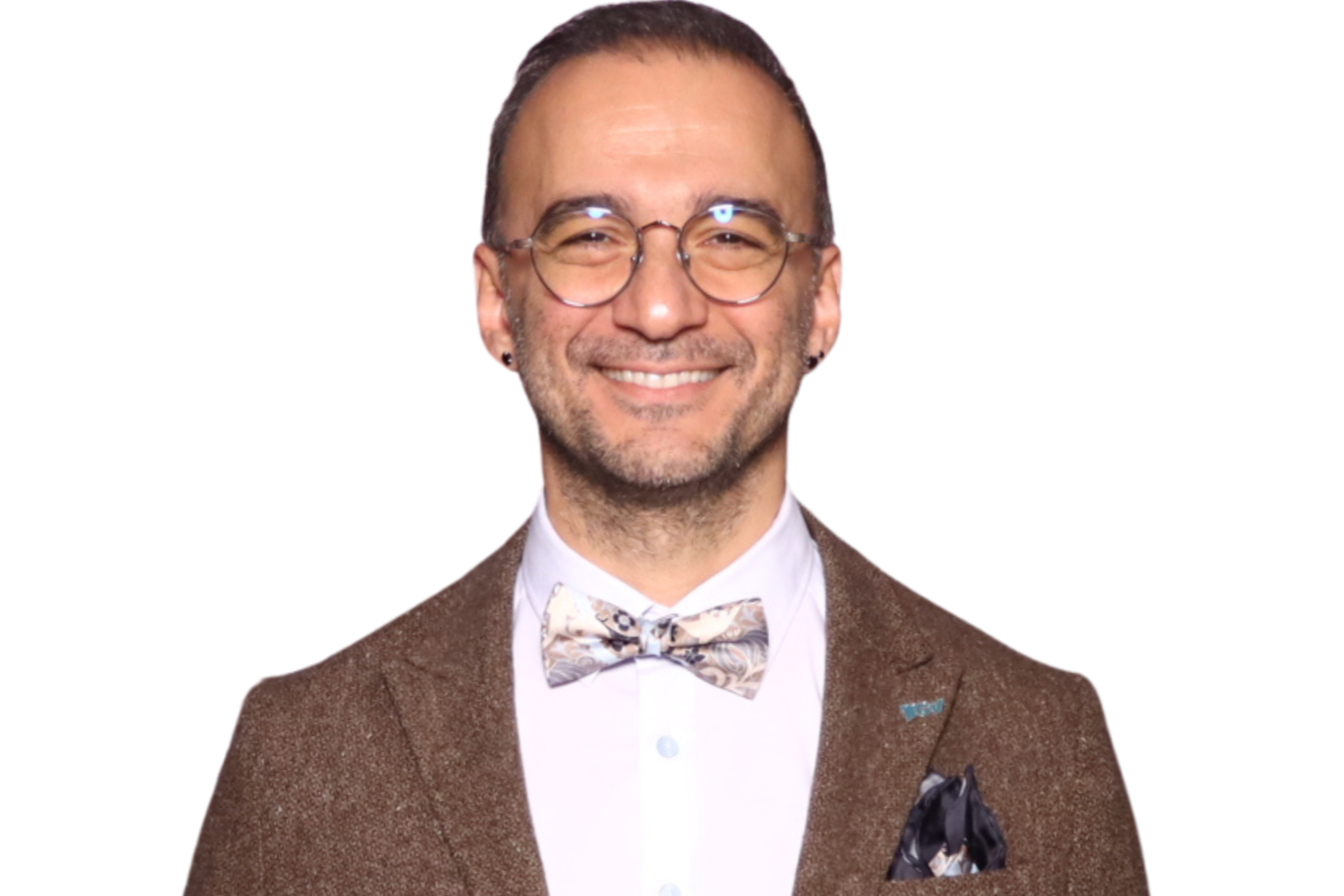
I am a Professor of Economics at Yildiz Technical University and a TTGV Climate Pioneer. My work focuses on energy economics, CCUS, and green growth, utilizing quantitative tools like Python and GAMS to assess the economic viability of decarbonization technologies and design markets for a net-zero future.
Energy Economics & CCUS
Deep expertise in Carbon Capture, Utilization, and Storage (CCUS) and electricity market dynamics. Active contributor to the EU COST Action TRANSMIT.
Policy & Advisory
Contributing economic insight to national strategies with the Presidency of Strategy and Budget (SBB) and international bodies.
Quantitative Modeling
Thriving in interdisciplinary environments using Matlab, Python, GAMS, and Stata to solve real-world optimization problems.
Climate Dashboard
Live data on the economics of climate change — the core of my research.
Explore the Full Dashboard
Live CO₂ & methane concentrations · Global temperature anomaly · Carbon prices in major ETSs · Renewable energy trends
Active Projects
CETPartnership Joint Call / Horizon Europe & TÜBİTAK
Work Package Leader (WP6) & YTU Principal Investigator
INTACT: Integrated Assessment of Chain Tolerance to CO₂ Impurities
Leading the development of the INTACT-RISKAID decision-support tool, utilizing Stochastic Dynamic Programming and Monte Carlo simulations to optimize lifecycle asset management and investment strategies for Carbon Capture and Storage (CCS) infrastructure.
TÜBİTAK 1001 – BİLİMSEL VE TEKNOLOJİK ARAŞTIRMA PROJELERİNİ DESTEKLEME PROGRAMI
Principal Investigator / Coordinator
AB Sınırda Karbon Düzenleme Mekanizmasının Türkiye Ekonomisine Etkileri: Sektörel Maliyet Yükü, Fiyat Etkileri ve Sosyo-Ekonomik Yansımaların Hibrit Girdi-Çıktı Modeli ile Analizi
Araştırma Üniversiteleri Destek Programı (ADEP)
Principal Investigator / Coordinator
Büyük Veri ve Yapay Zeka Destekli Dinamik Girdi-Çıktı (AI-DIO) Modeli ile SKDM'nin Türkiye Ekonomisindeki Yapısal Dönüşüm Etkilerinin 2035 Projeksiyonu
TRANSMIT Cost Action
WG1 Co-Leader
Techno-economic analysis of carbon mitigation technologies. Leading Working Group 1 to evaluate system-level impacts of CCUS implementation.
Climate Lab Community
TTGV Climate Pioneer
Working with the Technology Development Foundation of Turkey to accelerate climate technologies and foster a community of practice.
12th Development Plan
SBB Rapporteur
Served on the Growth Dynamics and Green Growth Specialization Commission for the Presidency of Strategy and Budget (SBB).
Curriculum Vitae
Download Full CV (PDF)Education
Ph.D., Economics
Norwegian School of Economics (NHH), Bergen, Norway
2015
M.A., Economics
University of Southern California (USC), Los Angeles, USA
2009
M.A., Economics
Marmara University, Istanbul, Türkiye
2007
B.S., Economics (En.)
Dokuz Eylül University, Izmir, Türkiye
2003
Experience
Professor of Economics
Yıldız Technical University, Istanbul
2026 – Present
Associate Professor of Economics
Yıldız Technical University, Istanbul
2020 – 2026
Climate Pioneer
TTGV Climate Lab Community Program, Ankara
2025 – Present
Visiting Professor, Solar Academy
Institut National de L'Énergie Solaire, France
2021 – 2024
Short-term Consultant
International Finance Corporation (IFC) – World Bank
2020
Postdoctoral Fellow
City University of Hong Kong, School of Energy & Environment
2015 – 2016
Tools
Languages
Teaching
Input-Output Models & Policy Analysis
A graduate-level course focusing on environmentally-extended input-output models, covering matrix algebra, impact analysis, and policy evaluation techniques.
Advanced Environmental Economics
Explores theoretical foundations of environmental policy, externalities, optimal control theory for resource management, and the economics of climate change.
Energy Economics & Climate Policy
Analysis of energy markets, regulation, renewable energy integration, and international climate agreements, bridging theory with real-world application.
Selected Talks & Lectures
Invited talks, keynotes, and guest lectures. For the full list of 40+ conference presentations, see my CV.
ECO-SPHERE Circular Economy Workshop
"How do we make circularity work—not just technically, but economically?" — ECOSPHERE MSCA CoFund, FBE Red Hall, Yıldız Technical University, İstanbul
İklim Lab: Yatayda Kesen Alanlar
Horizontal climate technologies — TTGV Climate Lab Community Program
Listen to the interview34th Quality Congress — KalDer
Effective Productivity Solutions in Engineering — Turkish Quality Association, İstanbul
Agriculture, Bioenergy, and Biomaterials in the Circular Bioeconomy
Keynote speaker — Workshop, Ankara, Türkiye
TrANsMIT Training School on TEA for CCUS/NETs
EU COST Action CA21127 — Economics of Carbon Capture: A Brief Intro, Prague, Czechia
TrANsMIT COST Action Working Groups Meeting
WG1 Co-Leader — Teesside, UK
TrANsMIT COST Action — TEA of CCUS and NETs
Workshop on synergies and differences — Trondheim, Norway
WIRE's Working Groups Workshop — Moderator WG3
COST Action CA20127 — Naples, Italy
International DAAD-TGU Conference on Economic Dimensions of Sustainability
İstanbul, Türkiye
Scientific Solar Summer School — Plenary Lecture
"Solar and Economy" — Institut National de L'Énergie Solaire, Bourget-du-Lac, France
SCCER CREST Lunch Seminar
Competence Center for Research in Energy, Society and Transition — University of Basel, Switzerland
Rokko Forum — Kobe University
Graduate School of Economics — Kobe, Japan
10th Conference on Economics of Energy and Climate Change
Toulouse School of Economics — Toulouse, France
Selected Publications
The Circular Bioeconomy: Concepts, Opportunities, and Limitations
In D. Zilberman, J. Zhuang, J. Wesseler & M. Khanna (Eds.), Handbook of Circular Bioeconomy, pp. 127–157. Springer Nature (2026). Open Access.
Read on SpringerEmpirical Insights into Economic Viability: Integrating Bitcoin Mining with Biorefineries Using a Stochastic Model
With G. Semaan, G. Wang & G. Kumar. Systems, Vol. 13 (2025).
DOIComprehensive technical and economic evaluations of using second-life batteries
With F. Turan & A.R. Boynuegri. Journal of Energy Storage, Vol. 120 (2025).
DOIGeneration failures, strategic withholding, and capacity payments in the Turkish electricity market
With S. Acar & S. Kızılkaya. Energy Policy, Vol. 184 (2024).
DOIAI Revolution and Coordination Failure: Theory and Evidence
With B. Ünveren & S. Sunal. Journal of Macroeconomics, Vol. 78 (2023).
DOIFeed-in tariff policy in Hong Kong: Is it efficient?
With P. Dato & A. Pommeret. City and Environment Interactions, Vol. 10 (2021). Open Access.
DOISmart Grids and Renewable Electricity Generation by Households
With P. Dato & A. Pommeret. Energy Economics, Vol. 86 (2020).
DOIEstimation of Residential Electricity Demand in Hong Kong under Electricity Charge Subsidies
With A. Pommeret & H. Tastan. Energy Economics, Vol. 88 (2020).
DOILevelized Cost of Consumed Electricity
With A. Pommeret. Economics of Energy & Environmental Policy, Vol. 9, No. 1 (2020).
DOIIntermittent renewable electricity generation with smart grids
With P. Dato & A. Pommeret. In Climate and Energy Protection in the EU and China, Springer (2019).
DOIA two-sector model of economic growth with endogenous technical change and pollution abatement
With J.-P. Amigues. Environmental Modeling & Assessment, Vol. 24(6), pp. 703–725 (2019).
DOIThe Economics of CCS: Why have CCS technologies not had an international breakthrough?
Renewable & Sustainable Energy Reviews, Vol. 95, pp. 328–340 (2018).
DOIOptimal storage under uncertainty: investigating the implications of frugality and prudence
Economics Bulletin, Vol. 37(3), pp. 1624–1629 (2017).
Read Paper